Background
Personal Viewpoint
In reflecting on the chapters of my life, one of the most poignant lessons I've learned is that life's journey is not a linear path; it's a mosaic of diverse experiences. The setbacks, the triumphs, and the moments of introspection have collectively shaped my viewpoint. It's not just about achieving goals; it's about evolving, contemplating, and embracing the ever-changing nature of one's aspirations. In this journey, I've come to realize that the beauty of life lies not only in the destination but also in the intricate details of the voyage. It's about finding joy in helping others, maintaining meaningful connections, and embracing faith and positivity as guiding beacons.
So, here I am, not just as a product of my past but as an evolving narrative. You're welcome to navigate the synopsis of my uncharted life journey.
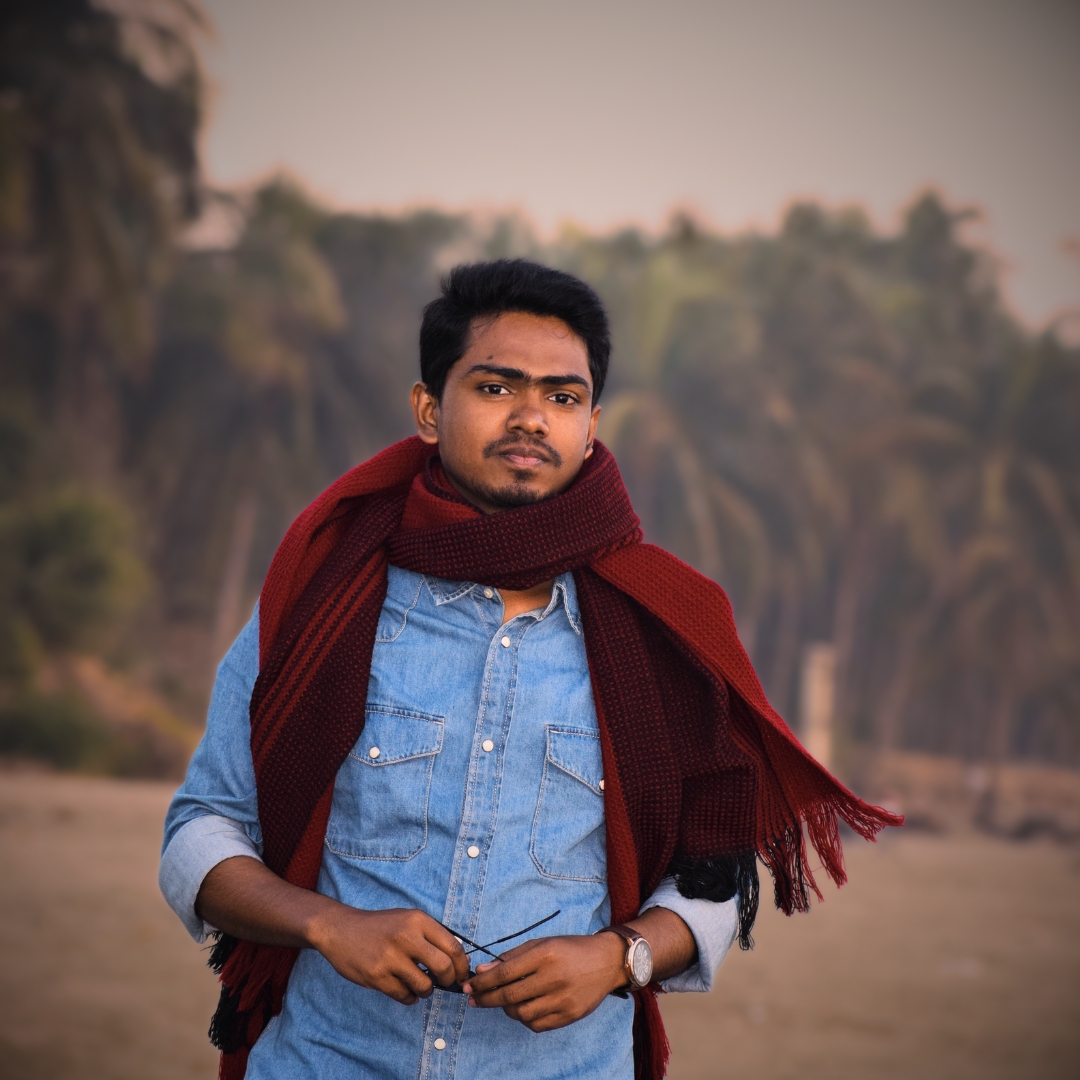
Early Life
I was born on June 21, 1996, the youngest in my large family of five brothers and two sisters. My father worked for the Bangladesh Power Development Board, and my mother was a housewife. I vividly remember that the house we lived in was "Onirban 4", Ashuganj, on the first floor. The government colony was a vibrant community full of helpful and open-minded people. As a child, I was adventurous and spent most of my time playing outdoors.
In 2004, we moved to Noakhali, our ancestral district in the southeast part of Bangladesh, just before a monsoon flood. I attended a government primary school, made lasting friendships, and started to focus on my studies. I earned scholarships and achieved the 2nd merit position at the sub-district level in the "National Primary School Scholarship" in 2006.
For my secondary education (6th-10th grade), I enrolled in a renowned government school. But, initially, I faced physical challenges, as I had broken a leg in 7th grade at an intra-school football match. Despite those obstacles, I earned several merit scholarships, including the "National Junior Scholarship". Inspired by a teacher's guidance to be a visionary, I made a significant shift in my approach to learning deeply after 9th grade. I believe my inquisitive mindset developed since then, and I started questioning scientific methods until I get a clear answer. During that time, my school teacher, Nikhil Chandra Barman sir, played a pivotal role in guiding and nurturing my scientific curiosity.
Just before my national secondary school examination (SSC) in 2012, my father was diagnosed with liver cancer. While my family dealt with his illness, I had to sit for the exams. With unwavering support from my relatives, I achieved a perfect GPA of 5.00 out of 5.00. My family's care and support sustained me through all these challenges, and I consider them the most caring in the world.
Diploma Life
In Bangladesh, the post-secondary school path offers two options: attending college for 11th and 12th-grade education or pursuing a 4-year diploma in engineering. Due to family financial circumstances, I opted for the "diploma in engineering" in 2012. In February 2013, when I was 16, my father passed away. In the face of this adversity, my eldest brother and sister stepped forward, took on the responsibility of our family. Throughout the ensuing challenges, they shielded us from any sense of deprivation. Their unwavering support during those difficult times is a debt I can never fully repay.
During the 4-year program, I acquired hands-on expertise in power systems and automation. Notably, I also focused on developing my soft skills. We lived in a hostel with four roommates, sharing a single desktop computer until I acquired my own in 2016. As my diploma primarily covered industrial-based electrical curriculum, I self-studied basics like spreadsheets, presentation slides, C programming, and so on.
In the final diploma year, I delved into electrical circuit simulation using Pspice and Multisim and learned power system analysis using PSAF. To complete my diploma in electrical engineering in 2017, I did an industrial attachment on PLC and automation. This experience clarified my interest, revealing that I was more inclined towards electronics than power systems. This period of my life was particularly significant because it led to the formation of some long-lasting friendships.
Undergraduate Life
After completing my diploma in engineering, I aimed to pursue a bachelor's degree in DUET. Dhaka University of Engineering & Technology (DUET) was the sole public university in Bangladesh offering undergraduate education to diploma students. In 2017, I experienced a significant setback when I couldn't make it into my desired undergraduate university. Life got tough, reshaping my perspective, and motivated me to focus on in-depth learning. I dedicated a year to intense preparation, studying for about 12 hours daily, and eventually, I succeeded in the admission test.
Throughout my bachelor's program, I dedicated myself to skill enhancement, including soft skills, management, communication, and leadership. I actively participated in various university clubs and competitions, volunteered for events like DUET Techfest-2019, 2nd International Conference on Advancement in Electrical and Electronic Engineering (ICAEEE), and Inter-University Engineering Mega Olympiad 2021 (IEMO). During the COVID-19 pandemic, I delved myself reading books outside my major, and I vividly remember one particular book, "Lectures on Physics" by Richard Feynman, triggered a deep interest in material science and astrophysics. The book's genuine and realistic narrative captivated me, immersing me in Feynman's classroom with every turn of the page. Its impact was so profound that I still carry it with me today. Yet, my academic path, unfortunately, didn't align with the fascinating realms uncovered in those lectures.
When I was a third-year undergraduate student, a VLSI competition introduced me to the world of designing complex circuits. The resemblance to material science struck me, and I felt attraction to those complex design that turned into passion by time. The field is ever-changing and challenging, but that's what makes it exciting. Designing and exploring possibilities in nano-scale became my obsession since then. With a transformed perspective since my undergraduation, I'm now open to any opportunity that combines astrophysics and chip design. If a chance arises to work on such a project, I'd dive in without hesitation.
My life is enriched by the joy of helping others and maintaining strong relationships with my professors, peers, family, and friends. Their unwavering support inspires me in all my endeavors. I believe, embracing faith and positivity makes life truly beautiful.
After Undergraduate & Job Life
Before completing my undergraduate studies, I had already made a firm decision to build my career in the semiconductor field. However, opportunities in this domain were extremely limited in Bangladesh. At that time, Ulkasemi Pvt. Ltd. was the only prominent company working in integrated circuit design locally, whereas North America appeared to be a gold mine for semiconductor research and industry. With this reality in mind, I planned to pursue both paths simultaneously—industry experience in Bangladesh and higher studies abroad.
To strengthen my academic profile for overseas education, I remained closely connected with my undergraduate supervisor after graduation. Through this collaboration, I worked on two research papers, both of which were successfully published in international conferences. As part of my preparation, I took the IELTS examination in November 2024 and achieved an overall band score of 7.5. Later, in April 2025, I appeared for the GRE and scored 312 (Quantitative: 166, Verbal: 146).
At the same time, I was preparing for Ulkasemi’s recruitment process, as I did not want to miss the opportunity to enter the semiconductor industry locally. I applied for the Analog Layout Design circular in March 2025. The selection process consisted of five stages, with the training phase being the fourth. I completed the training phase just before sitting for my GRE examination. After the GRE, I attended the final managerial viva and was selected. I officially joined Ulkasemi Pvt. Ltd. on May 2, 2025, as a Trainee Engineer in the Analog Layout Design Department.
From the very beginning, I did not merely love the work—I genuinely enjoyed it. The Cadence design environment felt remarkably familiar, almost as if I had been a layout designer in a previous life. Due to my performance during the training phase, I was assigned to real project work within just 15 days of joining. The project was based on a medical device System-on-Chip, and I joined during its initial development stage, contributing to parts of the previous design iteration.
During my third month at the company, while I was still a trainee engineer, I was assigned a highly complex block—an Rx ADC. The design was particularly challenging due to strict area optimization constraints and extensive bit-level connectivity involving both analog and digital devices. Completing this block took nearly two months of dedicated effort. This design remains one of the most memorable experiences of my professional life, as it tested my patience, resilience, and confidence. Like many analog layout designers, I faced uncertainty and moments of self-doubt during the design phase, but completing it successfully restored my faith in my own capabilities.
After six months, I was promoted to Assistant Engineer. Subsequently, our team worked extensively on the analog front-end core as well as PAD cells with ESD protection. I was also involved in post-layout simulations, where I worked on resolving Layout Dependent Effects (LDE) issues in PAD cells. Collaborating with large cross-functional teams—including RTL, Design Verification, and Physical Design engineers—gave me a comprehensive view of SoC development. Our System-on-Chip project is now on the verge of completion.
As my responsibilities grew, I continued working on increasingly advanced layout tasks and gained exposure to projects and IPs implemented across multiple advanced process technologies. Working extensively on lower-node designs became an important part of my professional development, allowing me to build practical experience across different technology nodes while continuing to handle demanding project requirements.
In January 2026, I was promoted to Engineer, and my work in the field continues.
Throughout this period, I also applied for higher studies abroad. However, I realized that the opportunities I received were not aligned with my true interests and long-term enthusiasm. As a result, I made a conscious decision to gain more industry experience before pursuing a PhD in chip design in future. This field has become more than a career choice—it has evolved into my passion. I find genuine joy in the work I do, and I am willing to sacrifice other opportunities to stay aligned with my goals and deepen my expertise.
I firmly believe that having faith in oneself is one of the most powerful paths to success—and this belief has become the guiding principle of my life.